A holiday show in December, planned in October
A short winter show before the break: the weekend to choose, a price that covers the hall, a one-page program, and when to put tickets on sale.
Nov 2, 2026 · 5 min read
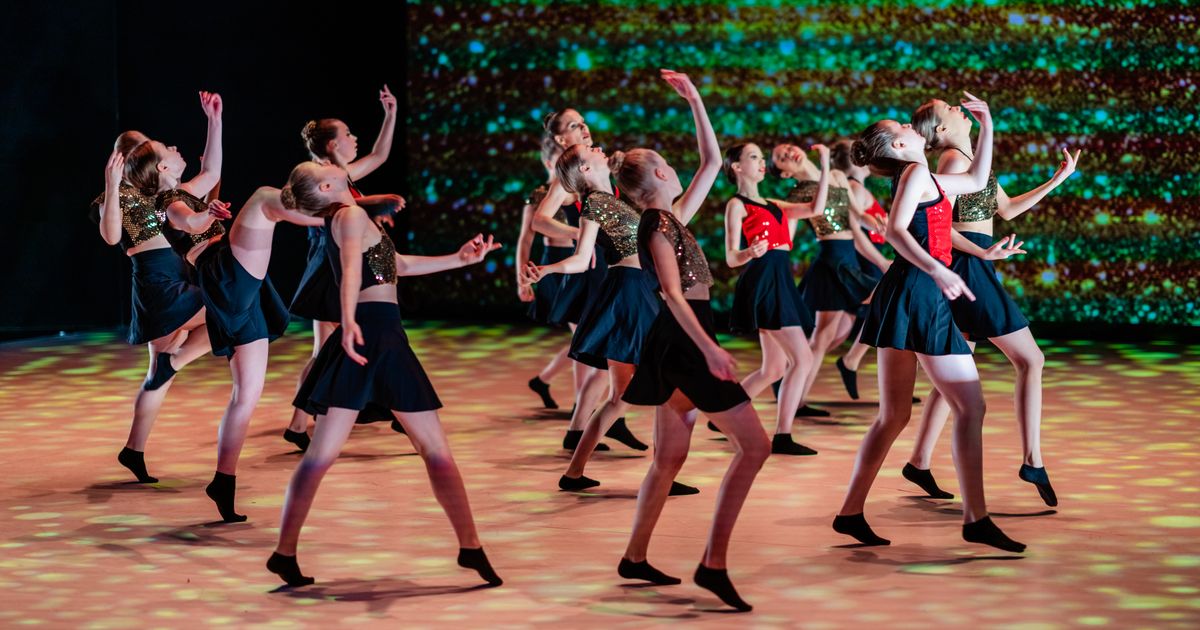
The holiday show always starts as the small one. A few pieces, an hour, nothing like the spring recital. Then the hall needs booking, the classes need a running order, someone wants a printed program, and the week before the break turns into the busiest of the year.
The difference between a December show that's a pleasure and one that's a scramble is decided in October. If you're reading this in early November, you're still in time, but not by much: book the hall this week.
The date comes first
Not the last week before the school break. It's the week families leave early to visit relatives, the week of every school concert and class party, and the week your own teachers are worn out. Turnout drops and nerves rise.
The first or second weekend of December is the sweet spot. Classes have had all of October and November to learn a piece, families are home, and nobody has started travelling. A Sunday at 2 PM suits the youngest performers and the grandparents alike.
Check what else is on. Look at your school boards' calendars for concert nights, your town's parade or tree lighting, and the dates of Hanukkah and other celebrations your families keep. Break dates vary by district and province in Canada and by district in the US, so look up the ones your families actually follow rather than guessing.
Book the hall now. School auditoriums, church halls and community centre gyms fill their December weekends early. If you're using your own space, block the day on your calendar so no rental or party lands in it.
Keep it short
A holiday show should run 60 to 75 minutes, with no intermission or a short one. The arithmetic is easy: one piece per class, about three minutes each, plus a minute to change over.
Say you have 18 classes. That's 18 × 4 minutes, or 72 minutes. Add a welcome and a thank you, and you're at about 80. Any more classes than that, and either some perform together or you run two shows: an early one for the little ones, a later one for older dancers.
No new costumes. This is what keeps it small. Ask for something every family has: black bottoms and a red or white top, plus one festive touch you provide, like a hat or a scarf. Say what each class wears in the first email, so nobody's shopping the night before.
One piece, started early. Teachers start the holiday piece in the first week of November. That gives five or six classes to learn it, which is plenty for a short routine.
A ticket price that covers the hall
Work out what the show costs before you price it. Say:
| Cost | Amount |
|---|---|
| Hall, four hours | $600 |
| Sound and a technician | $200 |
| Programs and signs | $80 |
| Total | $880 |
With 250 seats, plan for 200 sold. $880 ÷ 200 is $4.40 a seat to break even. A price of $10 an adult and $5 a child, with lap babies free, covers it comfortably: 150 adults and 50 children bring in $1,750.
Some studios make the holiday show free and ask for a donation to a food bank or a toy drive instead. That's lovely, and it still needs tickets: free tickets with a limit per family tell you how many are coming and stop 400 people arriving for 250 seats.
The printed program
One sheet, folded once. Front: the show's name, the date and your logo. Inside: the running order, each piece with its class and the performers' first names. Back: thank-yous to the teachers, volunteers and the hall.
Two habits save a lot of grief:
- Send every family the names as they'll be printed, a week before you print. Spellings get fixed then, not at the door with a pen.
- Print 10% more than you've sold. Grandparents take two.
If you'd rather not print at all, a large sign at the door with the running order works fine for a short show.
Selling the tickets
A timeline that works for a show on the first Sunday of December:
- Early November: the date, the time, the hall, and what each class wears.
- Mid-November: tickets on sale. If seats are tight, give your families a few days first (a family presale explains how).
- A week before: arrival times for each class, where to drop off, and where to park.
- The day before: a short reminder, with doors-open time.
The announcement can be this short:
Our holiday show: Sunday, December 6 at 2 PM
Every class performs one short piece, and the whole show is about 75 minutes. It's at the Riverside Community Centre gym.
Tickets go on sale Monday, November 16: $10 an adult, $5 a child, and free for little ones on a lap.
What to wear: black bottoms and a red or white top. We'll provide the hats.
Keep some for the door. Holiday shows get walk-ups: an uncle in town for the weekend, a neighbour who heard about it. Leave twenty seats for door sales and sell them on a phone as people arrive.
It works the same for music, theatre and cheer
A music school's version is a carol concert: each student or ensemble plays one short piece, ideally under two minutes, and the whole thing stays under an hour. A theatre company might run a holiday cabaret of scenes and songs. A cheer gym can hold a showcase in its own gym, teams in uniform, families on the bleachers. The rules are the same: the right weekend, short, no new costumes, and tickets that tell you who's coming.
In Caletan
In Caletan, a holiday show is an event like any other: one or two shows, each with its own capacity, Adult and Child tickets (a child's can be free), and the door on any phone, with tickets sold there too. See events and shows, and Caletan's event ticketing software for the rest.