Behavior management without losing the room
Most behavior problems are about the class, not the child. What to change in the lesson first, what works in a busy room, and when it really is one child.
Nov 11, 2026 · 4 min read
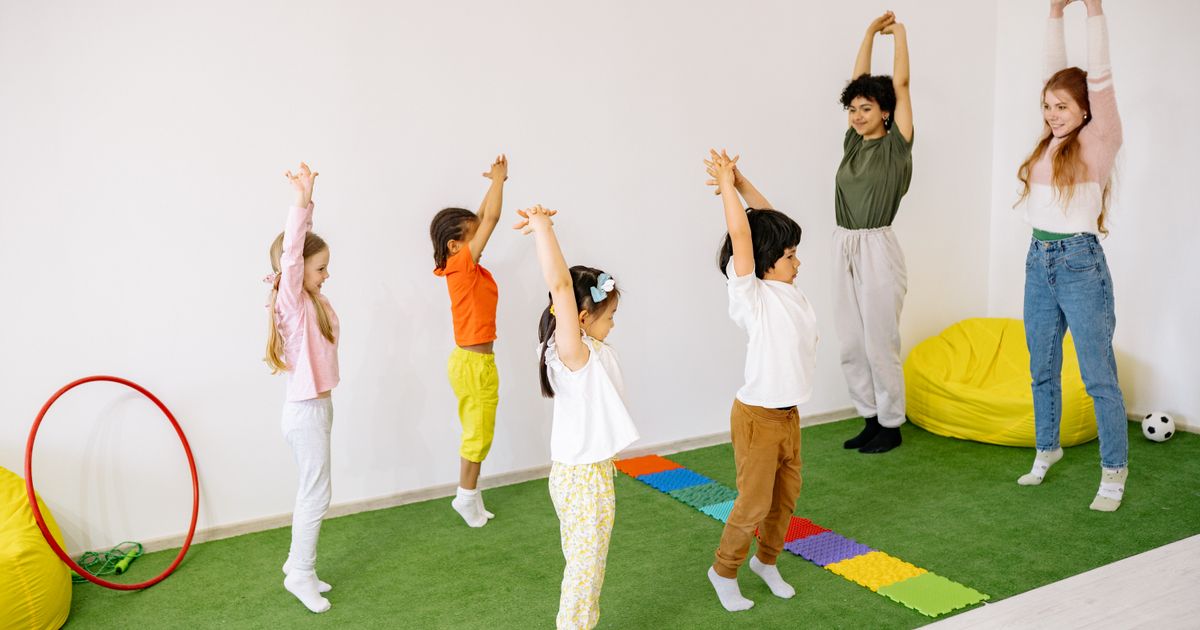
A class that's gone wild is almost never a class of difficult children. It's usually a class with too much waiting, instructions that run too long, or no shape the children can predict. Those are teacher-side problems, with teacher-side fixes.
Start there, before you start with the child. It's kinder, and it works more often.
The causes, most common first
Waiting in line. Six-year-olds waiting for a turn on the beam, at the wall of the pool, or for the one bag of clay will fill the time themselves. Every minute of waiting is a minute you've handed them. Run stations so several groups move at once, or give the waiting group a job: count the reps, watch for pointed toes, find the colour they'll use next.
Instructions that are too long. Anything past two sentences is lost on most children under eight. One instruction, do it, then the next one. Show more than you tell.
No predictable shape. A class that always opens the same way and closes the same way is calmer than one where nobody knows what's next. The same warm-up, the same bow, the same song to pack up. Routine does a lot of quiet work.
Too hard for too long. Ten minutes of failing at a cartwheel produces silliness. That's a way of coping, not defiance.
Too easy for too long. Same result, for the opposite reason. A child who finished the drawing five minutes ago is now decorating their neighbour.
The end of a long school day. A 4:30 class of six-year-olds is a different room from the same class on Saturday morning. Expecting the same focus at both is the mistake. Plan more movement and shorter pieces for the after-school slot.
What works in a busy room
Lower your voice, don't raise it. A room that has to quiet down to hear you does. A room being shouted over gets louder.
One signal for stop. A clap pattern, a raised hand, the music cutting out, a whistle at the pool. The same signal in every class, taught in week one and used every week.
Name what you want, not what you don't. "Feet still, eyes on me" is something a child can do. "Stop fidgeting" isn't.
Praise specifically and quietly. "Good job, everyone" does little. "You kept your elbows up that time" does a lot, and the children nearby hear what good looks like.
Stand closer. Moving to stand near a child who's drifting fixes most of it without a word, and without the audience a public correction gives them.
Give the busy child a job. Demonstrating, holding the kickboards, leading the count, handing out brushes. Often the child wants attention, and a real way to get it ends the problem in thirty seconds.
Use a helper. A teen assistant can run the waiting group while you coach the one doing the skill (more on that in teen assistants).
When it's the child, not the class
Sometimes it is. A child who's disruptive week after week in a class that's otherwise running well needs something different, and finding out what is your job before deciding anything.
Look for the cause before the consequence. Can they hear you over the pool filter? Can they see from the back row? Are they always worse in the last ten minutes, or after a particular child arrives? Patterns tell you more than any single bad day.
Ask whether it's the right class. Wrong age group, wrong level, or not quite ready for a group yet. Moving a child isn't a punishment, and it's often the whole answer.
Talk to the parent early, and not at the door. A quiet message, before it becomes a complaint:
"Hi Priya, I wanted to check in about Sam. They've found the waiting parts of class hard the last couple of weeks. Has anything changed at home or school that would help me know how to support them?"
That gets far better information, and far better help, than a conversation at pick-up with Sam standing there.
Be specific about the plan. "Sam finds the waiting hard, so we're giving them a job during that part" is a plan. "Sam's behaviour is a problem" is a complaint, and the parent will hear it as one.
Some children have a diagnosis, an anxiety, or needs the family hasn't shared yet. Make it easy to tell you: ask on your registration form whether there's anything that helps their child do well in class, and treat the answer with care.
What not to do
Don't discipline in front of parents at pick-up. It embarrasses the child and ambushes the parent.
Don't send a child out as a first resort. For some children that's exactly what they were hoping for. For others it's deeply upsetting. And a child sitting alone in a hallway isn't supervised.
Don't let one child define the class. The other eleven are your responsibility too. There's a point where making room for one child means failing the rest, and it's fair to say so to the family, kindly.
Don't put up with it silently for a term and then raise it as a crisis. The parent's first reaction will be that nobody told them, and they'll be right.
The fix that solves most of it
Reduce the waiting. Next time a class feels hard, pick one child and time how long they spend doing nothing across the hour. The number is almost always far higher than the teacher thinks, and the behaviour follows it closely.
Then write down what works for the room, so a cover teacher doesn't start from scratch. In Caletan's class registration software, a note on a session shows on its register for whoever is teaching it that day.