Student music recitals that don't run three hours
Sixty performers in one afternoon loses the audience by the interval. Splitting it up, a time limit per piece, the running order, and the student who doesn't show.
Nov 26, 2026 · 5 min read
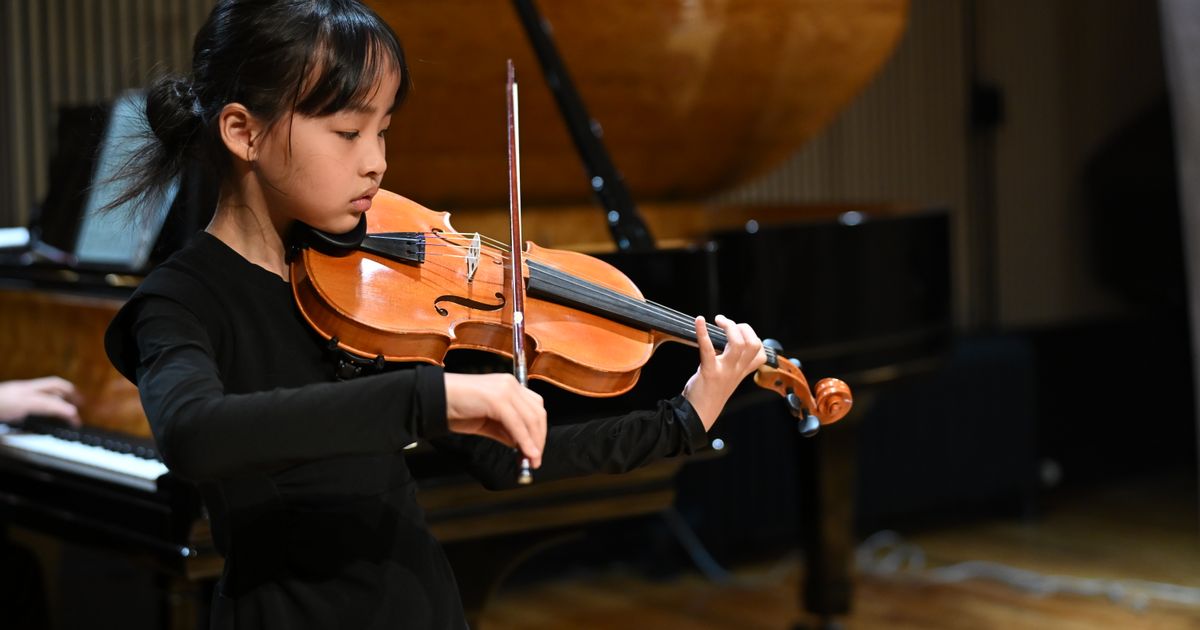
Every music school has run this recital. Sixty students, one afternoon, each playing one piece. It starts at 1:00. The beginners are wonderful, the intermediates are fine, and by 3:15 the families whose children played early have quietly gone home. Your most advanced student, saved for last, plays a beautiful Chopin nocturne to a third of a room and a row of empty coats.
Nobody planned a three-hour recital. It just adds up. The fix is to do the adding up first, before anyone's chosen a piece.
The arithmetic nobody does
A performer's time on stage isn't the length of their piece. It's walking on, adjusting the bench or the stand, the bow, the piece, the bow, and walking off. That changeover is rarely less than a minute, and it's often more with a young cellist and an endpin.
Work it through for sixty students:
| Students | Each, with changeover | Total |
|---|---|---|
| 30 beginners | 2.5 minutes | 75 minutes |
| 20 intermediate | 4 minutes | 80 minutes |
| 10 advanced | 7 minutes | 70 minutes |
That's 225 minutes of music and changeovers, before a welcome, an intermission or a single group piece. Three hours and three quarters.
An audience of parents, siblings and grandparents is good for about 75 minutes, 90 with an intermission. After that, people with small children leave, and they can't be blamed.
Two or three shorter recitals
Split it. With the time limits below and changeovers kept short, a performer averages a little over three minutes. Twenty performers is a recital of about 65 minutes. Thirty is about 100, which needs an intermission.
So sixty students become three recitals of twenty, say Saturday at 1:00 and 3:00 and Sunday at 2:00, with an hour between to reset the hall and clear the lobby. If your hall or your teachers can only manage two, make it two of thirty, each with a ten-minute intermission. Either is far better than one marathon.
How you split matters more than you'd think:
- Not by level. A beginners' recital and an advanced recital is tidy, but beginners never hear what they're working toward, and the advanced recital has no audience but its own families.
- By teacher or by day of the week. Each recital gets a natural mix of levels, and families tend to know each other.
- Siblings in the same recital. A family with two children shouldn't sit through both. Check your list for siblings before you finalize.
Each recital keeps the same shape: the youngest early, the strongest last, everyone hearing everyone.
A time limit per piece
Tell teachers the limits in the first weeks of term, when pieces are still being chosen, not three weeks before:
- Beginners: 2 minutes
- Intermediate: 3 minutes
- Advanced: 5 minutes
Five minutes rules out a whole sonata, and that's the point. One movement, or a cut agreed with the teacher, is plenty. Skip the repeats. A student who really wants to play a ten-minute piece can play it at a studio class or a solo recital of their own.
A line for the term letter to families, so nobody's surprised:
To keep our recitals to about an hour and a quarter, each student plays one piece: about 2 minutes for beginners, 3 for intermediate and 5 for advanced students. Your teacher will help choose something that fits.
The running order
A good order takes an hour of a teacher's time and saves fifteen minutes of the audience's.
- Start with the youngest. They're the most nervous and the most likely to fade. Get them on while they're fresh, and their families are happy for the rest.
- Group by setup. Every piano piece together, then the strings, then the guitars and voice. Moving a music stand and a chair in and out between every performer adds ten minutes over an afternoon.
- Ensembles at the edges. Put duets and group pieces before an intermission or at the end, where the stage reset doesn't interrupt the flow.
- Don't put a nervous student right after the star. Follow your strongest player with a confident one.
- End strong, but not too long. The last performer should be one of your best, playing something under five minutes, so the afternoon ends on a high, not a yawn.
Print the order and give it to every performer and every teacher, with a rough time beside each name.
Keeping the audience
Ask for it plainly, in the reminder email and in the welcome:
Please plan to stay for the whole recital. Every student has worked hard, and every one of them deserves an audience.
Then make it easy: close the doors during each piece, and let latecomers in only between performers. If the hall has a lobby, it's where the toddler goes, not the back row.
The student who doesn't show
There's always one. Plan for it so it costs nothing:
- Check-in table. Performers check in 30 minutes before the recital starts, with a teacher holding the list.
- Skip without comment. If someone isn't there when their turn comes, the host simply calls the next name. No "we're waiting for Daniel".
- The late arrival plays at the end of the half, if they want to.
- The program says "order subject to change". Then it's never wrong.
And for the student who freezes: their teacher, sitting close to the front, says calmly, "Take a breath, and start again from the top." The audience will applaud louder for that one than for anyone.
Seats, if the hall is small
Many recitals are free, but a 70-seat recital hall with twenty performers still needs a limit. Two seats per performer is forty, which leaves thirty for siblings, friends and teachers. Free tickets with a limit per order do this quietly, and tell you how many are coming. (For a bigger hall, see general admission.)
In Caletan
In Caletan, a recital is an event, and two or three recitals on one weekend are its shows, each with its own capacity and its own tickets, free or paid, with a limit on how many an order can take. See events and shows, Caletan's event ticketing software, or its music school software for the lessons around it.